Activities

Schloss & Dom in der UNESCO Welterbestadt Quedlinburg

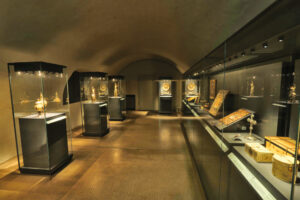
"Domschatz zu Quedlinburg"

Quedlinburg Cathedral Treasury


The treasury of the Collegiate Church of St. Servatius in Quedlinburg is an exceptionally well-preserved ensemble of medieval treasury art. Its origins date back to the founding of the convent under the Ottonian dynasty.

The collection’s wealth grew steadily through imperial privileges and endowments. The highly venerated relics, their precious containers, and—above all—the unique manuscripts served primarily liturgical purposes.

In addition to sculptures and panel paintings, the collection includes unique examples of goldsmithing, fine ivory carvings, and radiant works of Oriental crystal-cutting art.

A particular highlight is a knotted carpet dating from around 1200—the oldest surviving knotted carpet in Europe.


architecture-g589f0975c_1280

Lyonel - Feininger - Gallery

With the Dr. Hermann Klumpp Collection (1902–1987), the gallery holds one of the world’s most extensive collections of prints by Lyonel Feininger (1871–1956). It was founded in 1986 as the Lyonel Feininger Gallery, establishing a specialized museum for Classical Modernism of international renown in the city of Quedlinburg—now a World Heritage site.

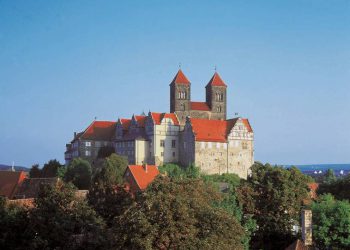
Schloss von NW
© Welterbestadt Quedlinburg

Quedlinburg Castle Museum

Housed in a Renaissance palace dating from the 16th and 17th centuries, the museum offers visitors an overview of the region’s prehistory, early history, and early medieval settlement. It also illustrates the evolution of the castle hill from the royal “Pfalz” (palace) of Henry I into a secular, Imperial-immediate collegiate foundation for noblewomen. In addition, key aspects of the town’s history are highlighted.

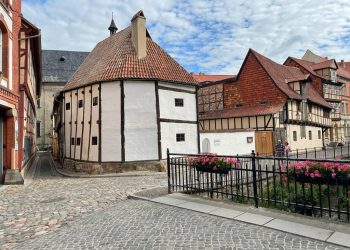
Ständerbau_2022_quer
© Welterbestadt Quedlinburg

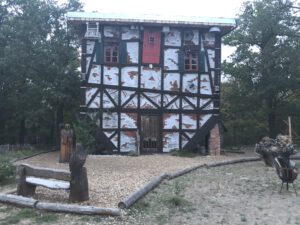
"Timber-Framed Building Museum"

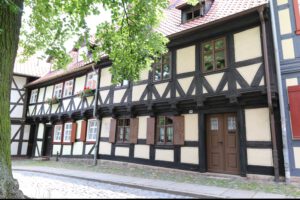
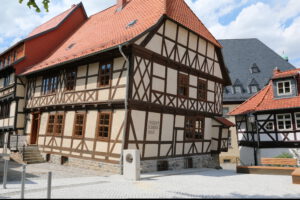
This half-timbered museum—the only one of its kind—is housed in a “high-post” structure dating from the first half of the 14th century. The vertical posts frame the building’s main body in a single, unbroken span, rising from the plinth or sill beam all the way to the roof. Ceiling beams pass through these posts, dividing the house into two stories; projecting tenons secured with wooden pegs provide resistance against tensile and shear forces.

Collegiate Church
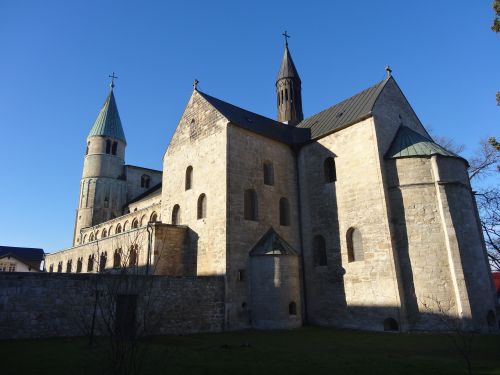
St. Cyriakus Gernrode

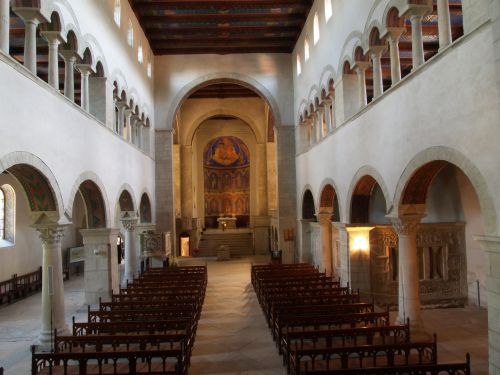
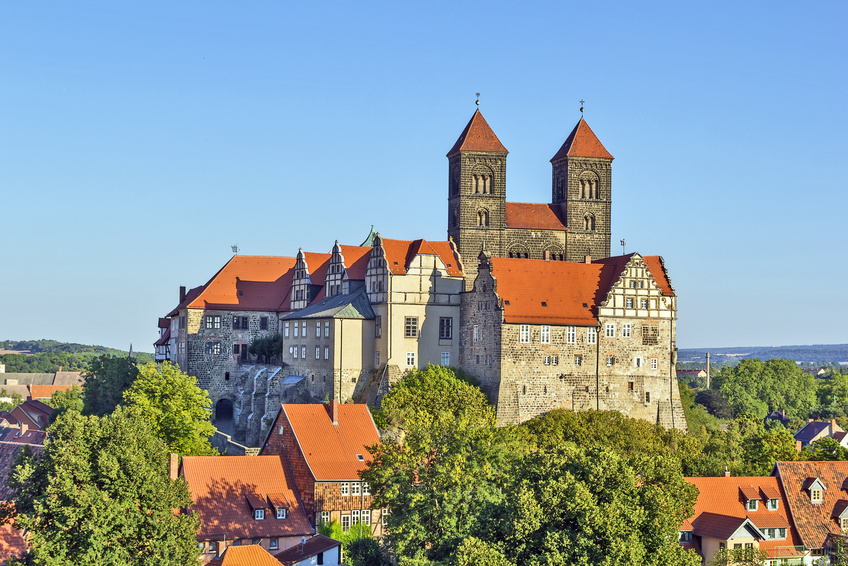
The 1,050-year-old Romanesque Collegiate Church of St. Cyriakus in Gernrode welcomes guests and visitors to services, devotional gatherings, concerts, and events hosted by the Protestant congregation, as well as to Catholic masses and ecumenical or regional meetings. In addition, guided tours of the church are offered daily at 3:00 p.m., with group or special tours of the Holy Sepulchre available upon request.

Each year, around 40,000 visitors from Germany and neighboring European countries travel to Gernrode via the “Romanesque Road” and the “Way of St. James” (Jakobsweg). In doing so, the collegiate church is gradually stepping out of the shadow of Quedlinburg and into the public spotlight. This gem on the eastern edge of the Harz Mountains has much to offer, particularly to guests with an interest in history and liturgy.

In 959, Margrave Gero—acting as the right hand of Otto I—founded an independent, secular collegiate foundation for noblewomen here. His daughter-in-law, Hathui, guided the foundation’s affairs as its first abbess and continued the construction of the collegiate church begun by Gero. Over the centuries, various renovations and alterations—both large and small—were added.

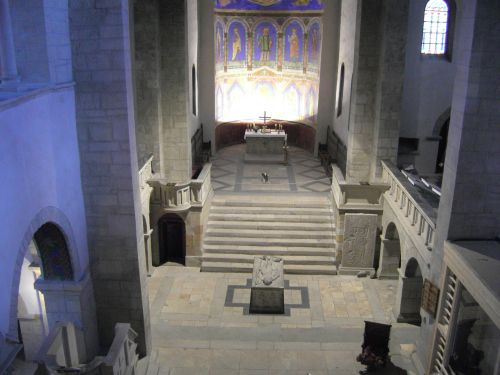
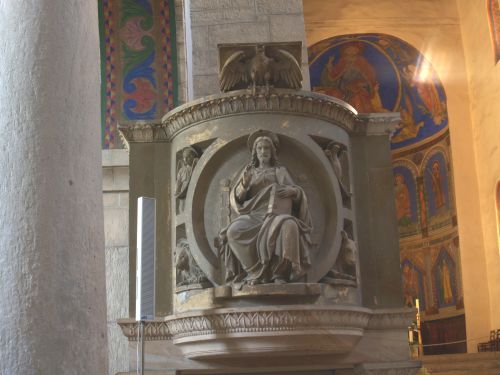
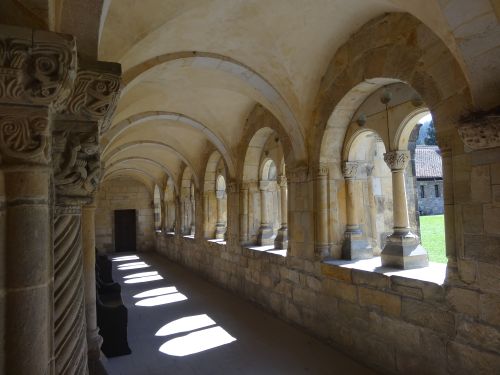
Today, however, the collegiate church largely retains its pure Romanesque style, featuring unique accessible galleries in the nave, a three-aisled eastern crypt, and the Holy Sepulchre. In the process, the collegiate church is gradually stepping out of Quedlinburg’s shadow and into the spotlight of public interest. This gem on the eastern edge of the Harz mountains has much to offer, particularly to visitors with an interest in history and liturgy.

In 959, Margrave Gero—acting as the right-hand man of Otto I—founded a free, secular collegiate foundation for noblewomen here. His daughter-in-law, Hathui, guided the foundation’s affairs as its first abbess and continued the construction of the collegiate church that Gero had begun. Over the centuries, various alterations and expansions were made.

Nevertheless, the collegiate church today largely retains its pure Romanesque style, featuring unique accessible galleries along the nave, a three-aisled eastern crypt, and a Holy Sepulchre.
2

St. Nikolai Church Quedlinburg

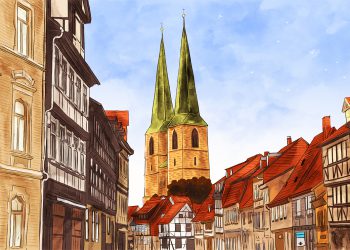
St. Nicholai Church was built to the glory of God. Its origins are believed to date back to around 1200, and traces of Romanesque architecture can still be found in the church today. According to an old legend, a shepherd who had grown wealthy after discovering gold played a key role in financing the construction. For this reason, a figure of a shepherd with his dog—crafted during the Baroque era—still stands on one side of the tower today. Locals refer to St. Nicholas Church as the “Shepherd’s Church.”

architecture-g589f0975c_1280

The "Münzenberg"

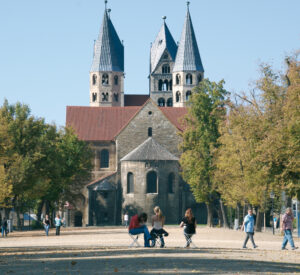
Directly opposite the “Schloßberg” (castle hill) rises the Münzenberg; in 986, Mathilde—daughter of the Emperor and first abbess of the Quedlinburg convent—had the St. Mary’s Convent built here together with her sister-in-law, Empress Theophanu. The nuns were charged with caring for the salvation of the soul of the late Emperor Otto II. Until the Reformation, the Romanesque St. Mary’s Church on the Münzenberg served as the counterpart to the collegiate church on the “Schloßberg”.

"Harzer Schmalspurbahnen"

- historic steam trains -

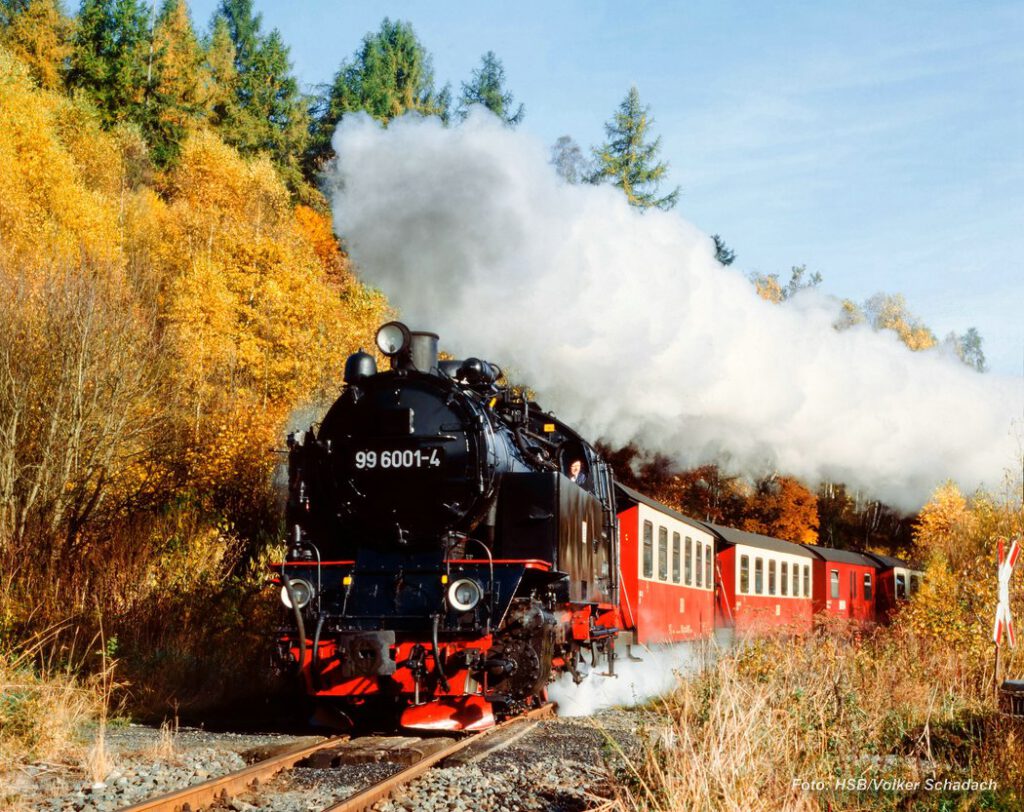
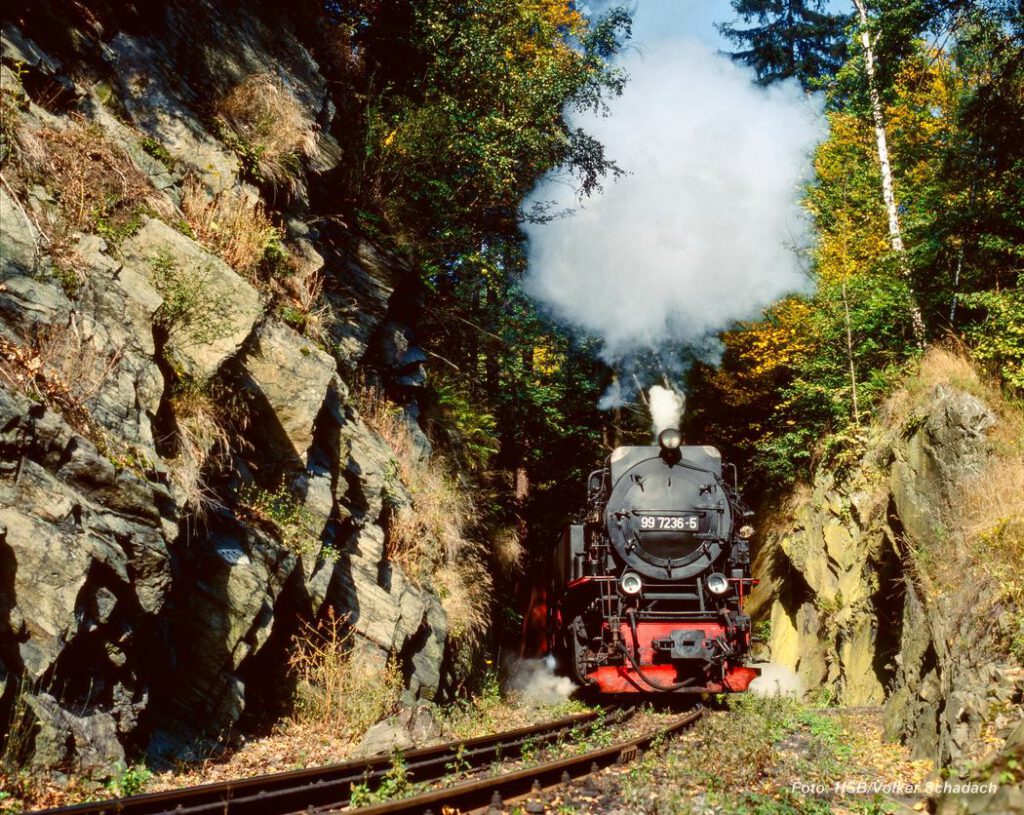
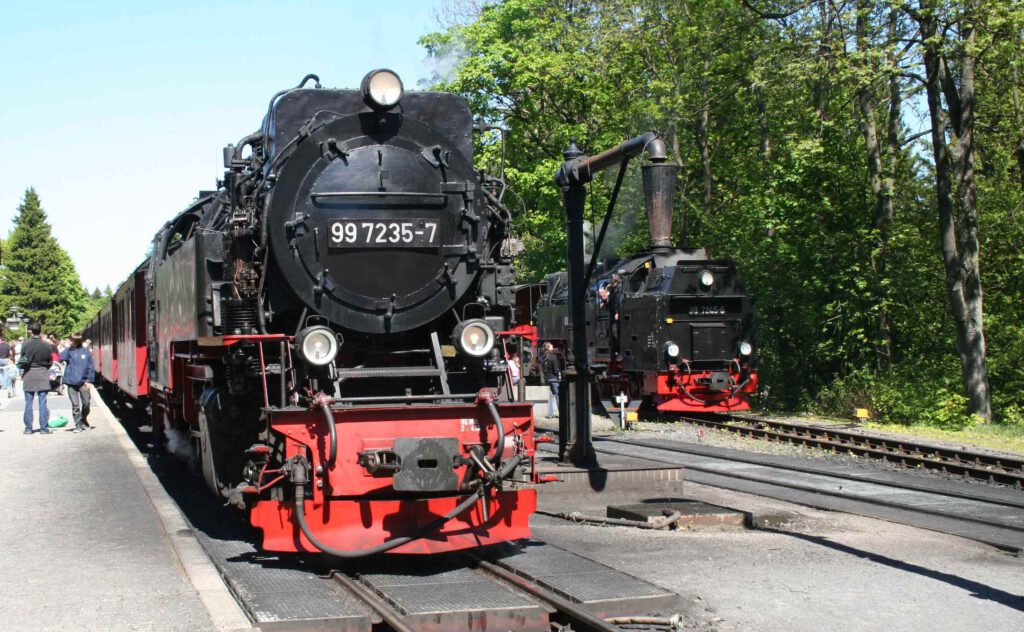
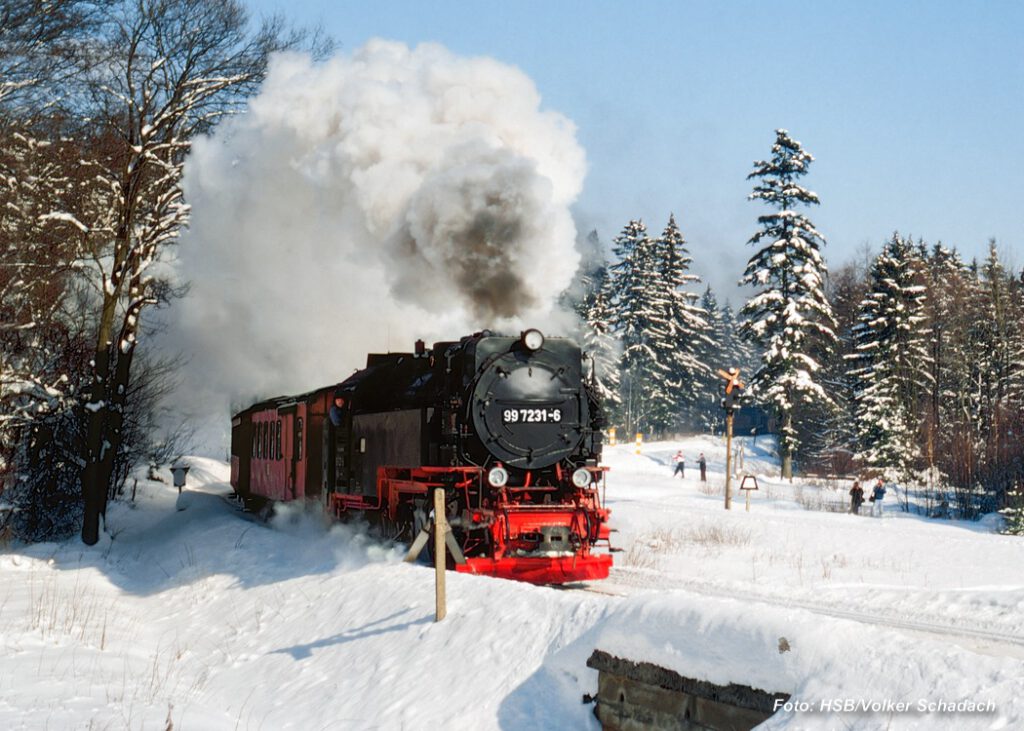
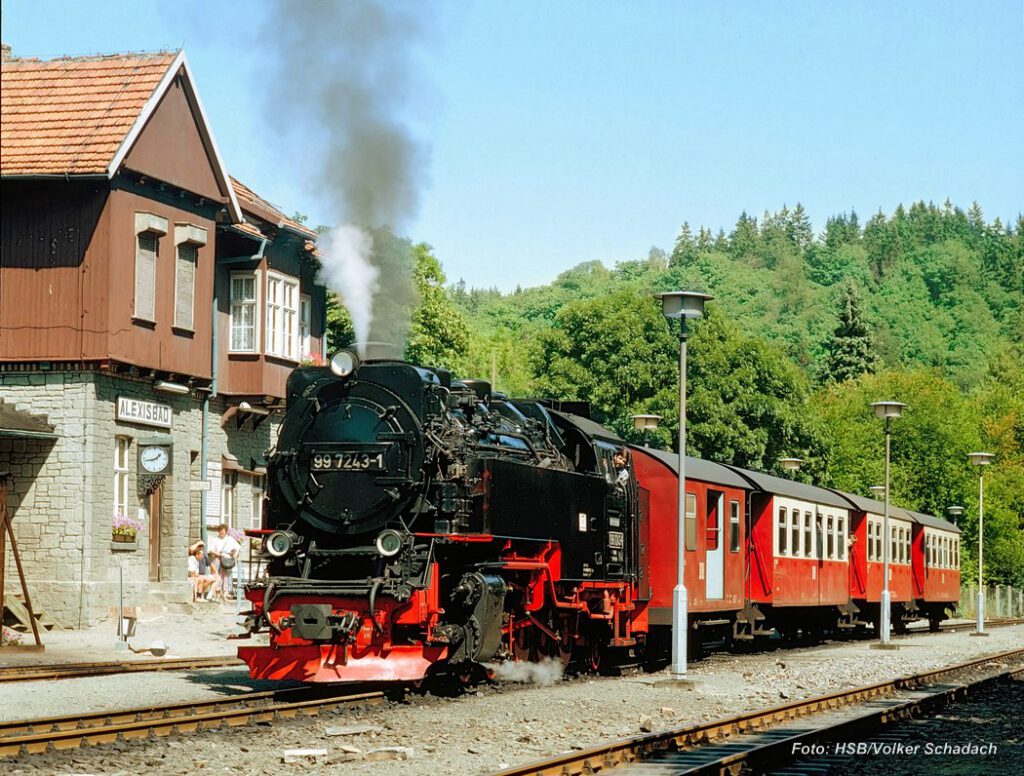
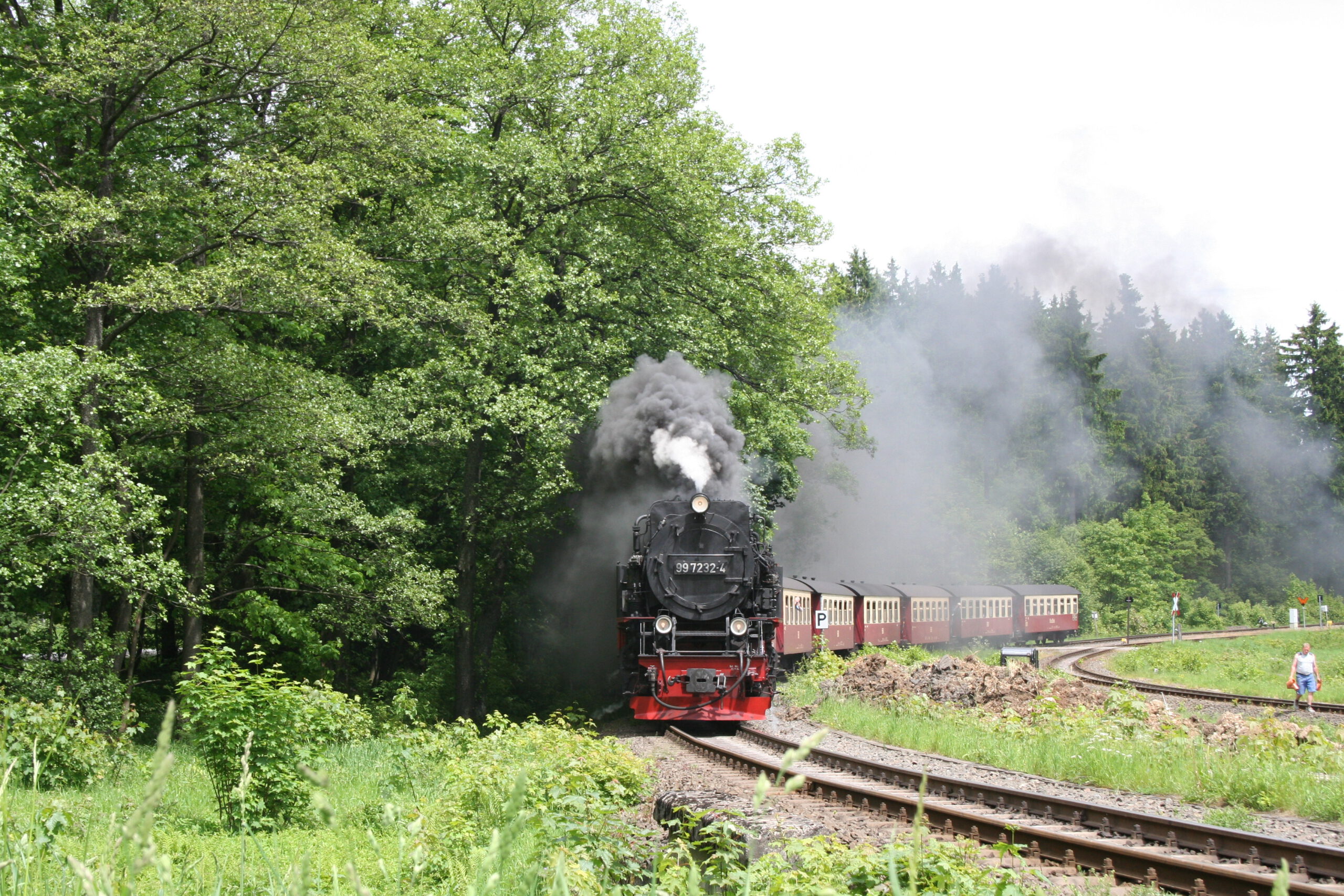
The Harz—Germany’s northernmost low mountain range—is traversed in its eastern section by a unique network of narrow-gauge railways. This network, which still operates scheduled steam-powered services today, opens up the rugged mountain landscape to travelers. Small trains pulled by steaming iron horses carry passengers through deep Harz forests, over steep mountains, and through romantic gorges, passing vast meadows and arriving at beautiful villages. Far removed from the hustle and bustle of modern travel, one can embark on a journey into the past.

The Harz Narrow-Gauge Railways (Harzer Schmalspurbahnen) combine the Harz Cross Railway (Harzquerbahn), the Brocken Railway, and the Selke Valley Railway (Selketalbahn) into a network spanning more than 140 kilometers.

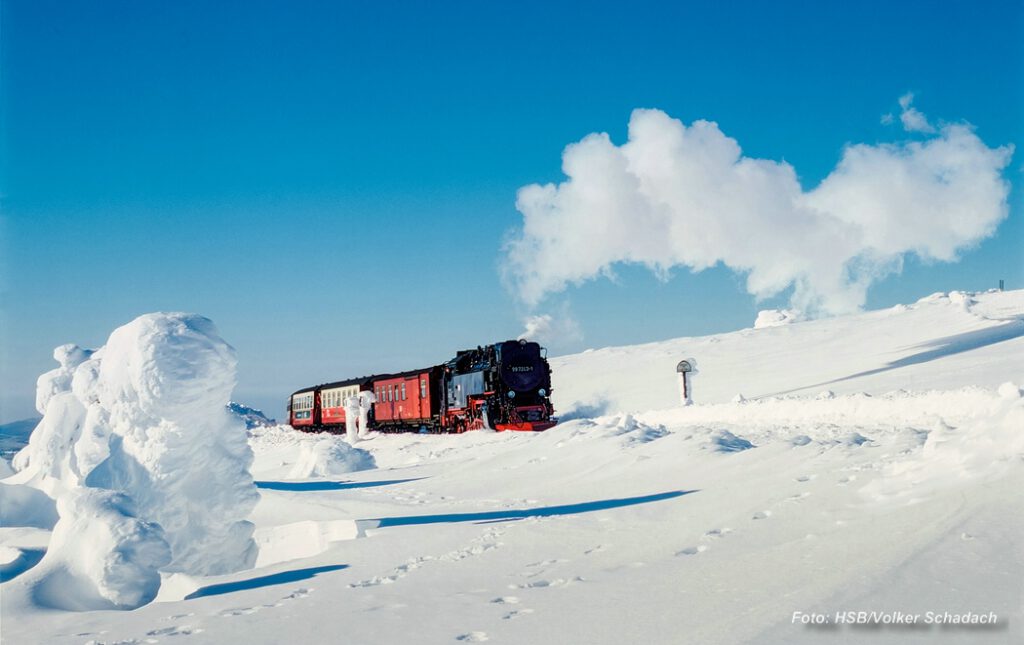
Since June 1992, trains have once again been running to the legendary Brocken—at 1,142 meters, the highest peak in Northern Germany. It is a demanding task for the steam locomotives, which generate around 700 horsepower and operate via pure adhesion—meaning they manage without cogwheels or similar aids. Indeed, the Brocken station, situated at an altitude of 1,125 meters, is the highest station on any German narrow-gauge railway, making it a must-visit for anyone traveling to the Harz or for railway enthusiasts. The Brocken Railway covers the steepest section of the route in approximately 50 minutes starting from “Drei Annen Hohne” station, offering passengers a breathtaking panorama of the Harz National Park along the way. A train ride through the snow-rich Upper Harz holds a special charm, particularly in winter; travelers are treated to views of fir forests buried in snow and windswept high plateaus, while the clear mountain air at the Brocken summit allows for a fantastic view across the vast landscape.

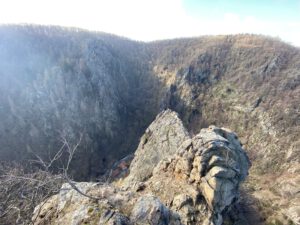
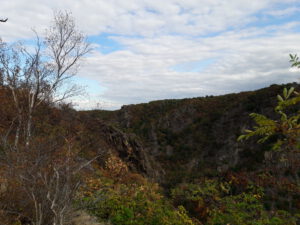
Hexentanzplatz in Thale

xxx

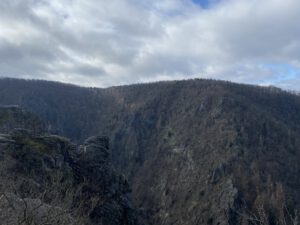
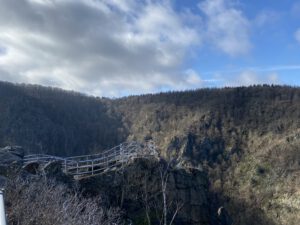
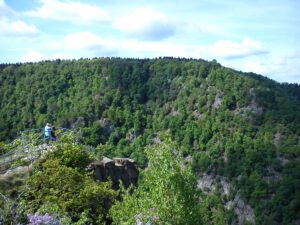
Rosstrappe in Thale

xxx

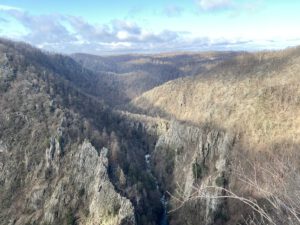
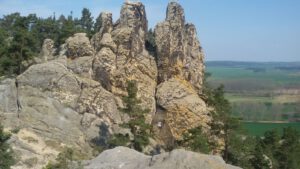
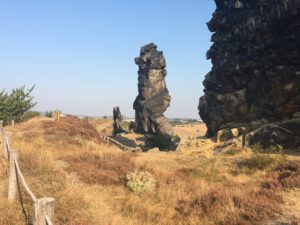
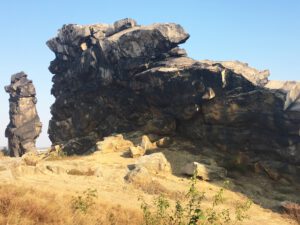
Teufelsmauer in Weddersleben

xxx

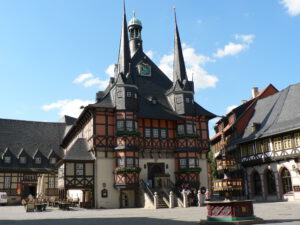
Wernigerode
"Colorful Town in the Harz Mountains"

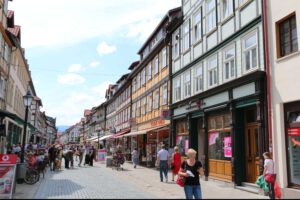
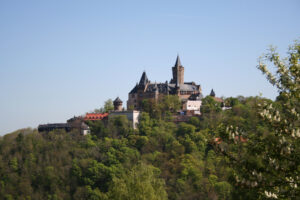
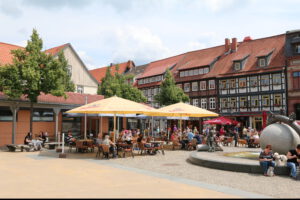
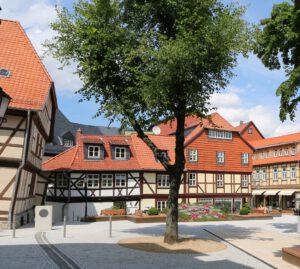
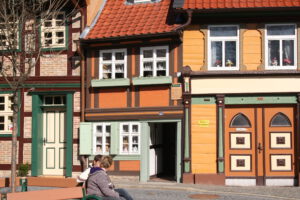
Even Hermann Löns was captivated by the town, which was first mentioned in 1121. He coined the epithet that so aptly describes Wernigerode: the “Colorful Town in the Harz.” Situated on the northern edge of the Harz mountains, Wernigerode offers visitors an idyllic array of architectural gems. Half-timbered houses spanning six centuries, the historic town hall, and the castle towering above the town stand as unique witnesses to history. Other highlights include a trip up the Brocken on the Harz Narrow Gauge Railways and a visit to the Bürgerpark, home to the “Kleiner Harz” (Little Harz) miniature park.

heaven-gedf3aef83_1280

The "BROCKEN"

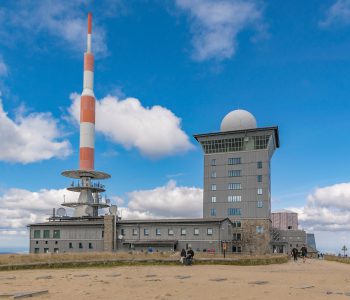
At 1,141 meters, the Brocken is the highest peak in the Harz mountains. From the summit, there is a magnificent panoramic view.

A trip to the Brocken is therefore one of the highlights of any visit to the Harz region. Even in the past, the summit exerted a magical pull on famous travelers such as Goethe and Heine. Goethe incorporated his impressions of the “Blocksberg” into the “Walpurgis Night” scene in *Faust*, while Heine wrote in his *Harz Journey*: “Up the mountains I will climb, where dark fir trees tower high, brooks are murmuring, birds are singing, and proud clouds race across the sky…”

Halberstadt
"Gateway to the Harz"

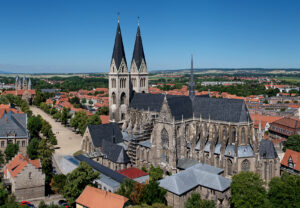
Even from a distance, magnificent religious buildings define the skyline of this former episcopal city. Impressive superlatives, charming ensembles of half-timbered houses, and a rich array of museums reflect the multifaceted character of this venerable cathedral city on the northern edge of the Harz mountains.

A highlight of any trip to Halberstadt is undoubtedly a visit to the magnificent Cathedral of St. Stephen and St. Sixtus, as well as the world-famous cathedral treasury. Within its vaults, the splendor and myth of the Middle Ages come back to life.

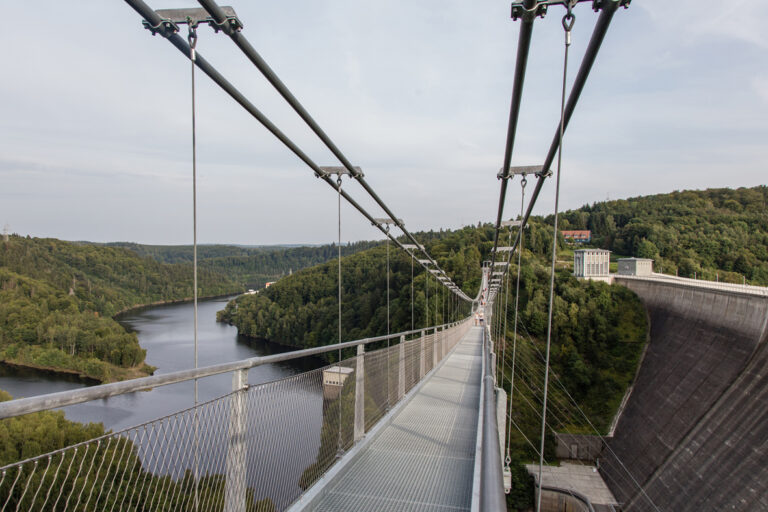
TITAN-RT

Suspension bridge

Spanning the Bode reservoir in the heart of the Rappbode Valley, the “Titan-RT” boasts an impressive total length of 458.5 meters. Completed in the spring of 2017, this delicate cable structure anchors itself into the slate rock on both sides of the valley with a massive tensile force of 947 tonnes. Four main suspension cables, each 65 mm in diameter, form the backbone of the 120-tonne structure. Additionally, two stabilizing cables help maintain the bridge’s shape and keep it in position during high winds. The 120 cm-wide grated walkway is lined along its entire length by a 130 cm-high railing and enclosed on the sides by stainless steel mesh.
This design allows visitors to walk across this unique structure without the need for special safety gear. Sturdy footwear and a bit of courage are all it takes to experience a truly special adventure at a height of 100 meters. Surrounded only by air, a bit of steel, and breathtaking nature, visitors can view the Rappbode Valley from a unique perspective. A visit during twilight is also worthwhile, as subtle bridge lighting ensures a safe crossing even after sunset.